Moral evolution
Blood CanticleMoral evolution names the uneasy ethical change in Lestat: he does not cease to be a vampire or resolve his guilt, but increasingly judges himself by what he does for others and what he chooses not to take from them. His efforts to help the dead and to refuse Rowan’s invitation to abandon her mortal life reveal a struggle between appetite and responsibility. The novel treats this change as unfinished: the desire to become a saint persists alongside the knowledge that he remains capable of violence.
Definition and Moral Conflict
Lestat’s moral evolution is not a claim that he has become innocent. He calls his supernatural powers dark and his talents evil, and his guilt after transforming Mona into a vampire leaves him feeling that nothing good can come from him. He considers seeking Stirling Oliver as though the Talamasca elder might absolve him, then recognizes that Stirling cannot make that judgment on his behalf. This distinction between wanting forgiveness and becoming responsible for his actions gives the concept its force.
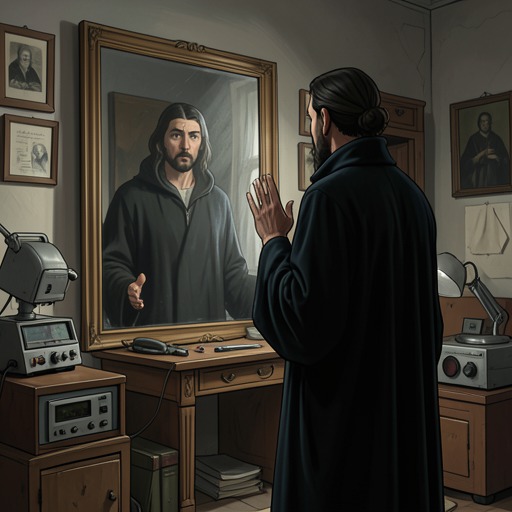
The conflict reaches back to Lestat’s imagined identity as Saint Lestat. In the Sistine Chapel, he longs to become a priest, consecrate the host, and avoid doing evil; almost immediately, however, he admits that he is not a saint and that the imagined public canonization and world-saving achievement never happened. He is not even in the chapel. He is a vampire who has lived for more than two centuries by drinking the blood of others. The abrupt collapse of the fantasy prevents moral aspiration from being mistaken for moral transformation: wishing to be pure does not make him so.
His reflections also unsettle a simple account of evil. When Quinn disputes Lestat’s claim that the harder theological question is how goodness exists, Lestat insists that he believes it. His concern is not merely whether evil can be explained, but how goodness can emerge in a world where he sees himself as its likely opposite. That question remains practical: goodness must be tested in particular encounters rather than secured by a flattering name or an imagined saintly destiny.
Acts of Care and Their Limits
Lestat’s actions for others provide evidence of change without erasing the uncertainty around it. When he helps Patsy’s spirit move on, he tells her that Quinn will gather and preserve her songs. At the moment of farewell, Lestat’s connection with her becomes perilous; he nevertheless turns the encounter toward her departure rather than holding her back. The scene makes care an action with a cost, not an abstract declaration of virtue.
Afterward, Lestat cannot confidently explain what happened. He tells Quinn that he and Patsy may have been connected as she began to rise, and that some force may have tried to take him with her. He is uncertain about his experience of angels and does not want to relive it; what matters to him is that Patsy has gone on. The uncertainty matters: the episode does not establish mastery over the afterlife or a settled spiritual authority. It leaves Lestat with a consequential act of assistance and an experience he cannot fully interpret.
His treatment of the dead also involves anger. After helping Patsy, he turns on the ghost of Julien, accusing him of indifference to Patsy’s soul and to his own descendants. Lestat’s compassion is therefore not serene or detached: it coexists with resentment toward a figure he sees as merciless. The contrast makes his conduct more revealing than a simple image of benevolence would be. His effort to do good does not require him to cease judging wrongdoing, but neither does his anger cancel the care he has shown Patsy.
Restraint and Responsibility
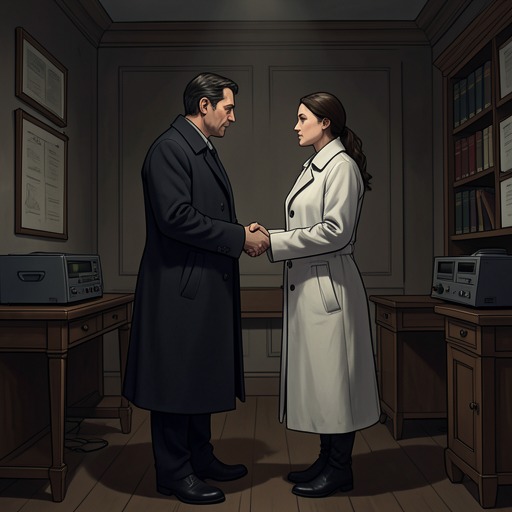
The clearest test of Lestat’s moral change comes when Rowan declares her love and desire for him. She explains that her love for Michael remains, but that she believes Michael should be released from a life lived in her shadow. She also makes clear that her feelings for Lestat arise from who he is, not simply from his supernatural nature. Lestat listens to her, remains physically close, and acknowledges the depth of his own desire. Yet he holds himself back rather than taking the future she offers.
His refusal is grounded in his recognition of Rowan’s existing life. He tells her that she has made that mortal life magnificent and that it cannot be disregarded. When she reaches the brink of leaving it, he insists that she herself must turn back. This is a deliberate choice against immediate gratification, made while he is acutely unhappy and fears losing her. Rather than treating his desire as sufficient reason to claim her, he accepts that loving Rowan entails respecting the life she has built with Michael.
The decision is not presented as painless triumph. Lestat later doubts that he could really have let Rowan go and fears he has forfeited her forever. He nevertheless comes to understand that he will carry her presence and the lesson of love he learned from her. Restraint changes neither his longing nor the possibility of loss; it changes what he does in response to them. The sacrifice is meaningful precisely because he experiences it as a loss, not as proof that he has overcome desire.
An Unfinished Ethical Trajectory
Maharet offers an external measure of Lestat’s development, telling him that she has confidence he will behave according to the high standards he has set for himself. She links this expectation to his moral evolution. Lestat does not receive the praise as a final verdict. Instead, he sees the situation as evidence that his efforts with Mona and Quinn were not enough and admits that he wanted to make Mona the perfect vampire. His intention has been overtaken by events that have taught him more than he could teach others.
That admission complicates the idea of moral progress. Lestat’s desire to guide others can become a desire to shape them according to his own ideal, and good intentions do not guarantee a good outcome. He recognizes that Mona and Quinn need a teacher other than himself and regards Maharet’s generosity in bringing them to her as a form of help he could not provide. Moral change therefore includes acknowledging limits: Lestat cannot make himself the sufficient answer to other people’s needs.
The closing dream keeps aspiration and appetite in the same frame. Lestat still imagines becoming a saint and saving souls, but also imagines hunting and destroying evildoers. He rejects the idea that purity has become his settled state, describing himself instead as drawn to the damned for a while. Yet the conclusion refuses complete cynicism: his heart continues to cry out, and love remains a goad and a song. Moral evolution is thus neither a conversion into innocence nor a simple relapse into evil. It is an ongoing demand that a blood-dependent, fallible being answer desire with care, accept responsibility for limits, and continue trying to distinguish love from possession.